
SOURCE & CONTEXT
Three questions.
Different kinds of evidence.
Source-side proximity can inform a buying decision. It does not, by itself, establish a stone’s geographic origin or its earlier history.
01 / SOURCE
Where a stone is encountered.
Source describes where or how a stone was encountered, acquired or introduced to the House. A sourcing location is not a geographic-origin conclusion. Private counterparties and sensitive routes remain private.
02 / GEOGRAPHIC ORIGIN
An attribution with a stated basis.
A laboratory’s geographic-origin opinion is attributed to that laboratory and retains its qualifications. Separately, documented extraction and transfer records may support an origin statement when identity continuity and custody gaps have been checked.
These are distinct evidence routes. Neither should be presented as the other. Where neither adequately supports a conclusion, geographic origin has not been established.
03 / PROVENANCE
The history that can be supported.
Provenance concerns a particular stone’s documented discovery, ownership, custody or journey. A laboratory origin report does not establish that chain. Gaps in the record remain gaps.
PRIVATE DOCUMENTATION
Context travels with the stone.
Appropriate documentation may accompany a private presentation. An IZɌA Private Stone Dossier brings together selected information; it is not an independent laboratory certificate.
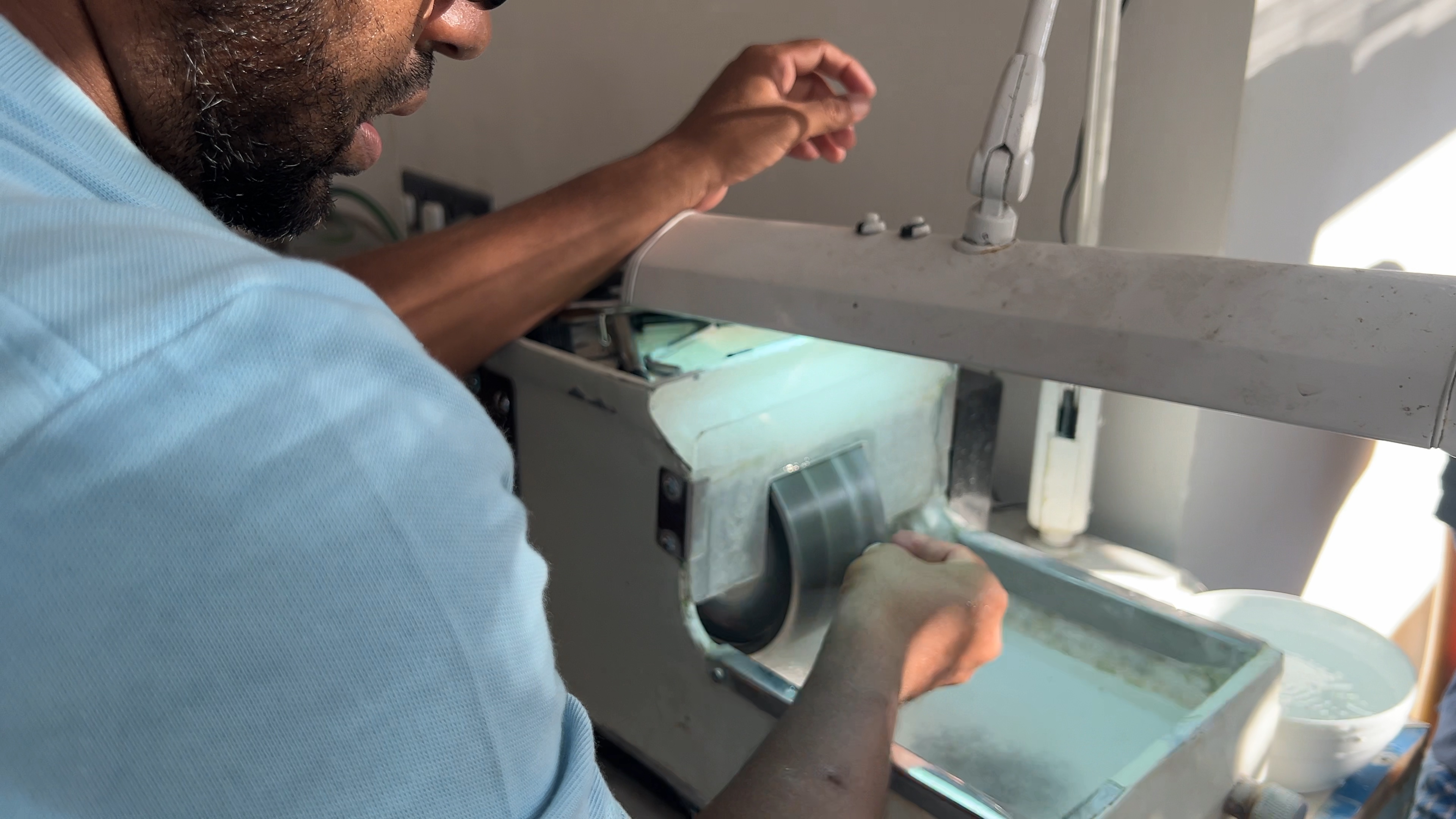
A photograph of a sourcing location does not establish that a particular stone came from that location.
PRIVATE ENQUIRY
A conversation begins
with a requirement.
Tell us what you are considering, and what matters to you in a stone.
Begin a private enquiry